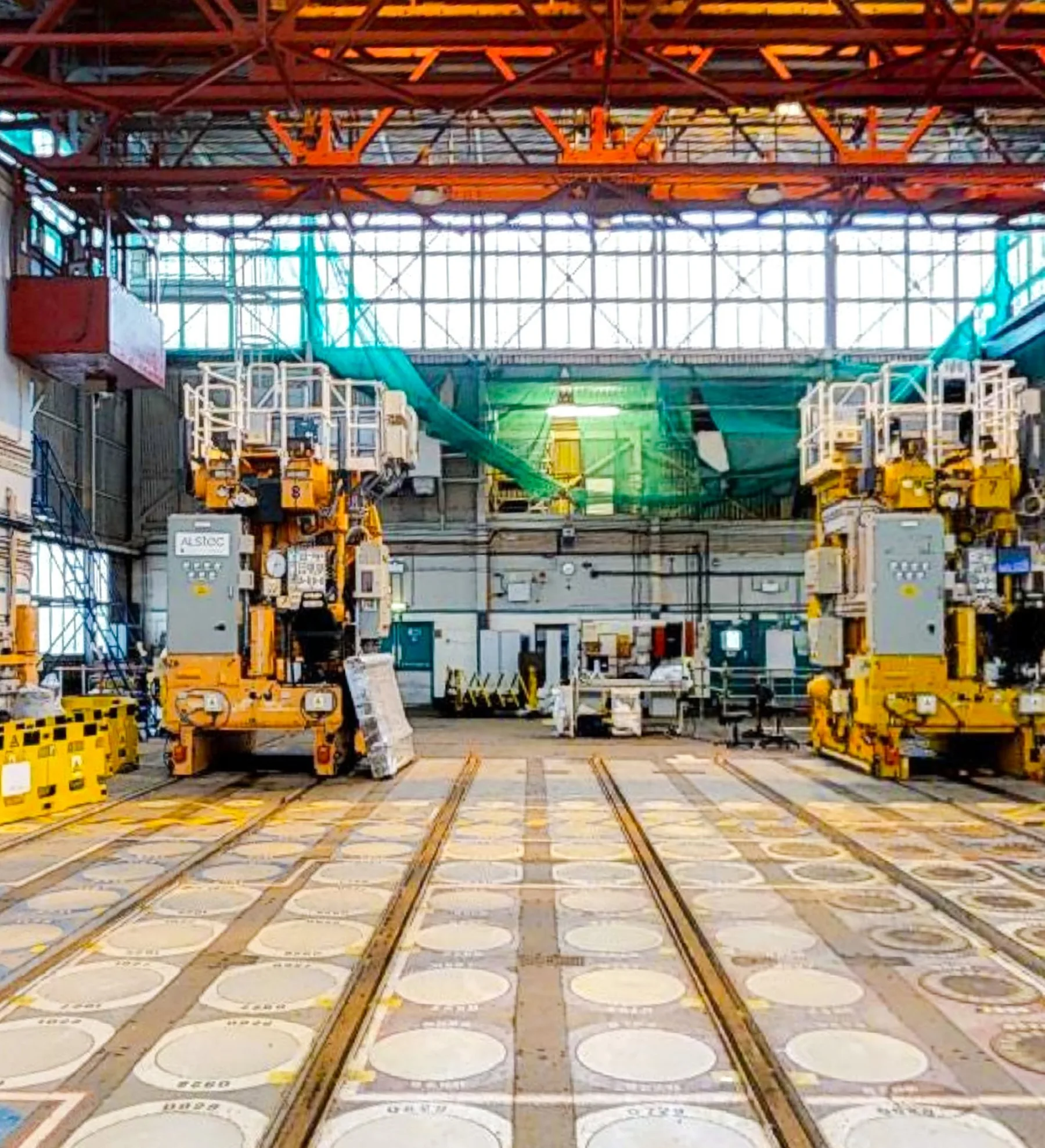
LiDAR Scanning in Eureka, California.
Matterport Pro3 reality capture and digital twin deliverables.
Matterport Pro3 LiDAR scanning and digital-twin documentation in Eureka, California, centimeter-grade spatial capture for commercial buildings, port and waterfront infrastructure, historic preservation, and engineering documentation.
LiDAR Scanning · Eureka
LiDAR Scanning in Eureka. What it actually looks like.
Eureka's LiDAR market concentrates around commercial real estate (downtown office buildings, Old Town historic preservation), port and waterfront infrastructure documentation, and engineering as-built work. Matterport Pro3 LiDAR capture in-house, with scan-to-BIM and survey-grade scope through partnership for larger or more specialized work. Interactive digital twin walkthroughs hosted online; CAD/BIM integration optional.
Sites + Industries
Where I scan in Eureka.
-
Commercial Real Estate
Downtown office buildings and Old Town commercial spaces. As-built and retrofit.
-
Port + Waterfront Infrastructure
Working waterfront facility documentation. Insurance and expansion planning.
-
Historic Preservation
Carson Mansion, Old Town Victorian buildings. Spatial-record preservation.
What's Included
What's included with lidar in Eureka.
-
Matterport Pro3 LiDAR Capture
LiDAR-based capture of interiors and building-scale sites at centimeter-level accuracy (about ±20mm). Equipment-dense floors, multi-room facilities, and existing-conditions documentation.
-
Interactive Digital Twin
Web-accessible 3D walkthrough, clients can navigate, measure, and explore the captured space directly from a browser. No software install required.
-
Construction Progress Documentation
Recurring interior scans through the build, especially MEP and framing before drywall closes it in. A dated visual record for closeout, owner reporting, and dispute protection.
-
Floor Plans + Measurements
Accurate floor plans extracted from the scan data. Measurements precise enough for design planning, retrofit work, and as-built documentation.
-
High-Resolution Stills
Pull still imagery from any angle of the scanned space, useful for documentation, marketing, insurance, or preservation records.
-
CAD/BIM Integration (optional)
Point cloud exports compatible with AutoCAD, Revit, and other CAD/BIM workflows for engineering and architecture clients.
-
Aerial-Plus-Ground Combo
Combined LiDAR scan with FAA Part 107 drone aerial photogrammetry for projects that span large outdoor sites, the two technologies complement each other.
-
Historic Preservation Documentation
Centimeter-grade spatial records for Ferndale's National Historic Landmark district, Eureka's Carson Mansion and Old Town Victorians, Mendocino village, and Point Arena Lighthouse, irreplaceable architecture captured as a permanent, measurable archive for restoration, insurance, and grant documentation.
-
Virtual Inspections & Remote Access
Insurance adjusters, engineers, AHJs, and off-site stakeholders can navigate the captured space from any browser. No site visit required. Useful for facility audits, dispute documentation, and multi-stakeholder coordination across geography.
How It Works
How it works in Eureka.
- 01
Site Walk-Through
On-site scoping visit to understand the facility, capture goals, and any specialty requirements (CAD output, multi-day scope, etc.).
- 02
Proposal
Written proposal with scan plan, deliverables, and timeline. Industrial scope scales with site size and equipment density.
- 03
Pre-Scan Coordination
Site access, safety briefing, equipment shutdowns or schedule windows for areas that need to be captured 'clean.'
- 04
On-Site Scan
Matterport Pro3 LiDAR capture documents every angle and elevation. Most single-floor facilities scan in 2–4 hours; large multi-floor buildings take a full day or more.
- 05
Processing + Delivery
Point cloud processing, mesh generation, walkthrough hosting, floor plan extraction, and CAD export. Standard turnaround 1–3 weeks depending on scope.
Investment
LiDAR engagements are scoped per project, site size, equipment density, and deliverable type all affect pricing. Most projects start in the low four figures. Site walk-through is free; the proposal includes detailed scope.
LiDAR Scanning in Eureka. FAQs
Frequently asked questions.
-
How long does an Eureka commercial LiDAR scan take?
Most Eureka single-floor commercial spaces scan in 2-4 hours on-site. Multi-floor buildings or facilities with equipment density (e.g., port infrastructure, industrial sites) take a full day or more. Standard turnaround for processed deliverables is 1-3 weeks. -
Do you scan Eureka's historic Old Town buildings?
Yes, historic preservation LiDAR is a regular Eureka project type. Carson Mansion, Old Town Victorian buildings, and other heritage architecture benefit from centimeter-grade spatial-record preservation for restoration planning, insurance, and historical archive. -
What is LiDAR and a digital twin?
LiDAR (Light Detection and Ranging) is high-precision 3D scanning that captures a space as a measurable, navigable model. A digital twin is the resulting 3D representation, a fully accurate spatial record clients can walk through, measure, and overlay design changes onto. Useful for industrial, commercial, and infrastructure documentation. -
Who is this service for?
Architects capturing existing conditions before a renovation, general contractors documenting construction progress and closeout, engineers and building owners who need measurable as-builts, and historic-preservation projects. Anyone who needs measurable spatial documentation that goes beyond photography. -
How long does a scan take?
Depends on scope. A single floor of a small commercial building can be scanned in 2–4 hours; a large multi-floor building or equipment-dense facility takes a full day or more. Tex provides a timeline as part of every project quote. -
What deliverables do clients receive?
Scan-to-CAD drawings drawn straight from the scan: DWG floor plans, reflected ceiling plans, interior and exterior elevations, and building sections. Plus registered E57 point clouds, an existing-conditions package, accurate measurement data, high-resolution stills from any angle, and an interactive 3D walkthrough you open in a browser. We deliver the finished CAD drawings, or hand off the registered point cloud for your own team to model. Output format is scoped per project. -
Do I need a full Revit/BIM model, or is scan-to-CAD enough?
Most projects that just need accurate as-built drawings, floor plans, elevations, sections, do not need a full parametric Revit model, and paying for one is money spent on modeling you will not use. Scan-to-CAD gets you clean, measurable drawings faster and for less. Full BIM earns its cost when you are running a large renovation or ongoing facility management off a live model. We scope which one your project actually needs on the first call so you are not overbuying. -
Can you scan a building that is occupied or still in operation?
Yes, and most commercial jobs are exactly that. We schedule around occupancy: off-hours, a floor or zone at a time, or during a planned shutdown window. The scanner captures a space quickly and without tearing anything apart, which is why occupied offices, running healthcare facilities, and active industrial plants are routine. Tell us the access constraints up front and we build the capture plan around them. -
How does this compare to photogrammetry or drone mapping?
The Matterport Pro3 captures LiDAR-based spatial data at centimeter-level accuracy (about ±20mm), ideal for interiors, equipment-dense environments, and existing-conditions documentation. For large outdoor sites where coverage matters more than per-point accuracy, drone aerial photogrammetry is the better tool. For many projects, the two are combined. -
How accurate is the scan?
The Matterport Pro3 captures with LiDAR at centimeter-level accuracy, roughly ±20mm under typical conditions. That's the right grade for existing-conditions documentation, as-built floor plans, renovation and tenant-improvement planning, progress tracking, and clearance checks. It is not survey-grade; when a project needs survey tolerances or geo-referenced control, we bring in a licensed survey partner. Project-specific accuracy targets are confirmed in the proposal. -
Can I get a Revit, AutoCAD, or BIM model from the scan?
Yes. Point cloud exports are compatible with Autodesk Revit, AutoCAD, Navisworks, and other CAD/BIM workflows. We can hand off raw point clouds for your in-house team to model, or coordinate scan-to-BIM modeling with an AEC partner for clients who need a delivered Revit model. Output format is scoped per project, let us know what your downstream workflow looks like. -
How is the digital twin delivered? Do I need special software?
The digital twin is delivered as a web-accessible link, clients open it in any browser, no software install required. From the browser you can navigate the space, take measurements, drop notes, and share access with stakeholders. Raw point cloud and CAD-compatible exports are available on request for technical workflows.
Inquire
LiDAR Scanning in Eureka. Tell me about your LiDAR scope.
Other Services in Eureka
Nine more services in Eureka.
-
creative
Photography in Eureka
Editorial, commercial, and lifestyle photography. Award-winning, FAA Part 107 aerial-capable.
Explore -
creative
Videography in Eureka
Cinematic videography for weddings, brands, and events.
Explore -
creative
Weddings in Eureka
Cinematic films and editorial photography for weddings.
Explore -
creative
Drone Photography and Videography in Eureka
Drone FAA Part 107-certified aerial photography and cinema.
Explore -
creative
Senior Portraits in Eureka
Cinematic, location-based senior sessions built around the person.
Explore -
creative
Proposals & Engagements in Eureka
Discreet surprise-proposal photography and film, with full logistics handled.
Explore -
brand
Marketing Consulting in Eureka
Strategy, content direction, and ad management for local operators.
Explore -
brand
AI Consulting in Eureka
AI consulting for local businesses. Strategy, lead systems, automation, and AI-made ads, from someone who built the software himself.
Explore -
brand
Web Design in Eureka
Custom-coded websites built to rank, no templates, no plugins.
Explore -
industrial
Matterport in Eureka
Matterport 3D tours and virtual walkthroughs for real estate, construction, and resort properties.
Explore
LiDAR in Other Cities