Episode 1
Foundations
Joey Viltrakis owns and operates a custom home building company in Humboldt County, California. The opening episode sets out what the series is for: the heart of building a company, a family, and one-of-a-kind custom homes.
Documentary Filmmaking · Prescott Valley & Northern Arizona
Some stories deserve more than a highlight reel. Long-form, interview-led films for companies, families, and nonprofits, made by a filmmaker whose work has been watched more than a billion times.
A documentary is not a longer commercial. It is the version of the story where the person telling it gets to be honest, where the hard part stays in, and where somebody watching in twenty years still understands what happened.
Most of what I shoot has a client and a deadline. Documentary work is the opposite discipline. It starts with listening, it takes as long as the story takes, and the job is to stay out of the way while somebody says something true.
I make three kinds mostly. Films for companies that have a real origin story and have never told it properly. Films for families who want a parent or a grandparent recorded while there is still time. And films for nonprofits that need a room full of donors to understand the work in ten minutes.
Based in Prescott Valley, Arizona, born and raised. The studio started in Eureka, California. Documentary work travels, because the story sits wherever the subject does.
Every one of these starts the same way, with a conversation about who needs to watch it and what they should feel at the end. The format follows from that answer, not the other way around.
01
The film a company makes when a case study is not enough. How the business started, what it survived, who it serves, told through the people who lived it. Runs 5 to 20 minutes, cut down to shorter social edits from the same shoot.
02
A sit-down interview with a parent or grandparent, their photographs and home footage scanned in, and the story recorded properly while the person is here to tell it. The most personal work I do, and the one families ask for once and keep forever.
03
Films built for fundraising and grant reporting. The mission stated plainly by the people doing the work and the people it reached, in a length that holds a room at a donor event and still cuts to 90 seconds for a campaign.
04
A single subject, one shoot day, a tight 3 to 6 minute portrait. The format that suits an artist, a tradesperson, a coach, or a small crew doing something worth recording, without the budget of a full production.
05
Long-running builds, restorations, ranch seasons, and field projects covered across months rather than a single day, with FAA Part 107 aerial where the scale of the thing needs showing from above.
Not listed?
If the story does not fit a category above, it is probably still a documentary. Tell me what happened and I will tell you honestly whether I am the right person to film it.
Start a conversationA documentary series
A custom home, a crew, and a company, filmed across a build on the Northern California coast. Joey Viltrakis runs a custom home building company in Humboldt County, California. The series follows the crew, the client's one-of-a-kind home, and the company being built around both. Click any episode to play in place.
Episode 1
Joey Viltrakis owns and operates a custom home building company in Humboldt County, California. The opening episode sets out what the series is for: the heart of building a company, a family, and one-of-a-kind custom homes.
Episode 2
The build continues where Foundations left off, and the episode closes the story of Joey's purchase of Friesen Design Build and why that purchase mattered so much to him and to the company.
Episode 3
Some of the most important components of the home arrive and bring turmoil with them. The crew works through a near disaster, then faces one nobody saw coming: the departure of a dear member of the tight-knit team.
This is the kind of film the formats above turn into: multiple shoot days across a season, interviews recorded properly, and the hard parts left in. The first three episodes have passed 300,000 views on YouTube.
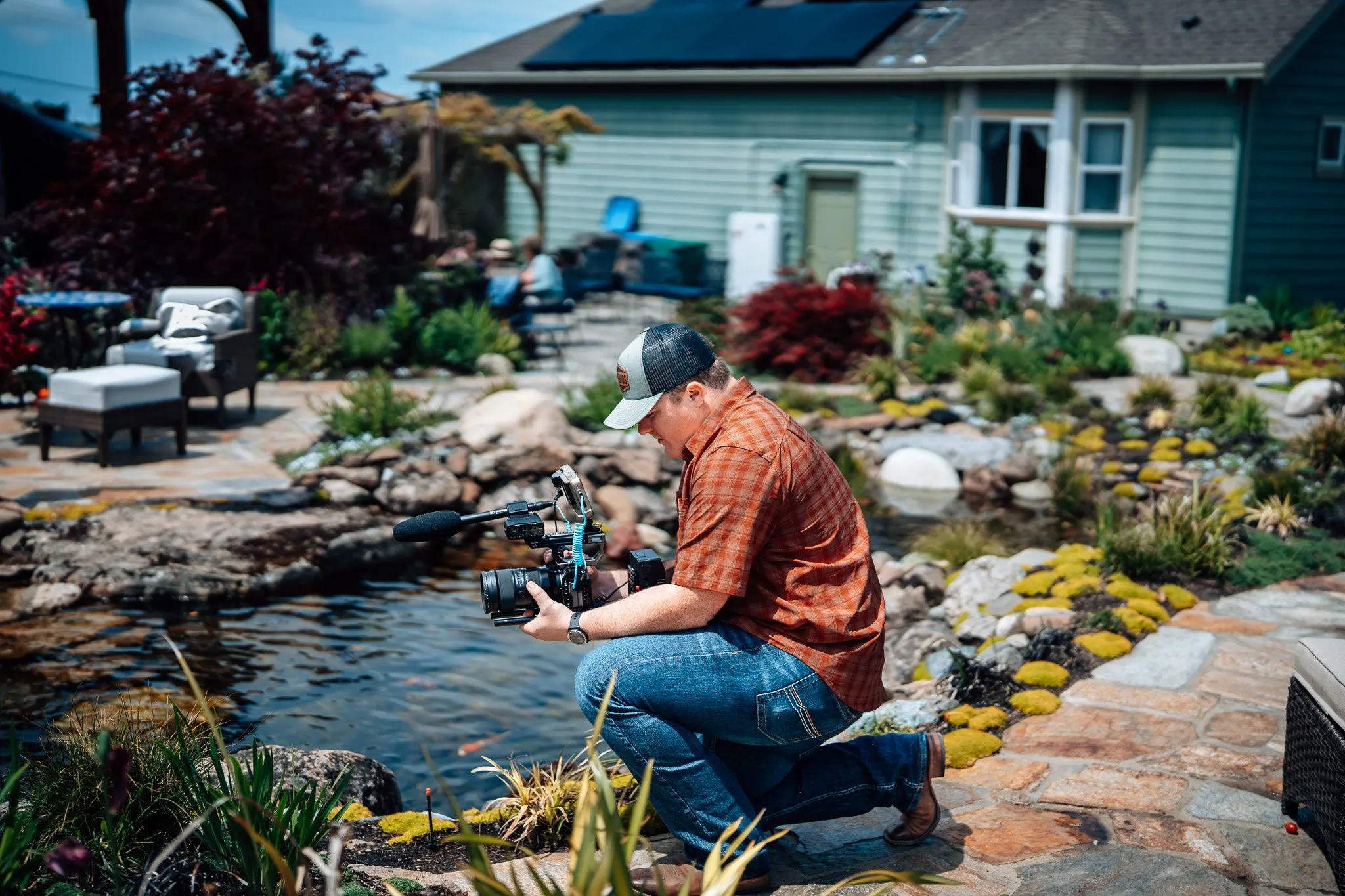
The thing that makes a documentary work is not the camera. It is knowing which twenty seconds of a two hour interview carry the whole film, and having the discipline to cut the rest.
I learned that in front of an audience rather than in a classroom. Work I have made has been watched over a billion times, which is a decade of finding out in public what holds attention and what loses it. That instinct is what I bring to a room with one person and a story worth keeping.
1B+ views, 2M+ followers, a decade of learning what holds attention and what does not.
TEDx speaker, a talk built and delivered on the TEDxHumboldtBay stage, structure under pressure.
YouTube Silver Creator Award, presented for passing 100,000 subscribers.
Voted Humboldt County's Best, with 100+ five-star reviews and no rating below five.
Cinema bodies and real audio, Sony FX3 and A1, Sennheiser wireless recorded separately, graded in DaVinci Resolve.
FAA Part 107 certified, licensed and insured aerial where the story needs the scale shown.
Nothing here is a surprise on shoot day. The scope, the number, and the questions all get settled before a camera comes out of the case.
A call about what the film is actually for. Who watches it, where it plays, and what should be true for them at the end. Scope and budget get set here, before anyone books a shoot day.
A recorded phone or video conversation with each subject before the camera comes out. It surfaces the real story, gets the nerves out, and means shoot day is spent capturing rather than discovering.
Interviews shot on Sony cinema bodies with dedicated Sennheiser wireless audio, recorded separately from the camera. Verite coverage of the work as it happens, plus the location and detail footage that lets the story breathe.
Photographs, letters, home video, and press clippings scanned and digitized at high resolution. Old material is usually what turns a good interview into a documentary.
Assembly, then a first cut for your notes, then the fine cut. Color graded in DaVinci Resolve and mixed for dialogue clarity, with properly licensed music so nothing gets pulled down later.
Master file for screening and archive, a web version, captions, and vertical cutdowns if the film needs a social life. Files delivered to keep, not streamed on a subscription.
Documentary work is scoped per project rather than sold as a package, because a single-day portrait and a film shot across a season are not the same job. The first call is free and ends with a written scope and a fixed number.
Documentary Filmmaking · FAQs
Documentary inquiries
Whether it is a company with an origin worth recording, a grandparent whose account should not be lost, or a mission that needs ten honest minutes, the first call is free and every inquiry gets a personal reply within 24 hours.