
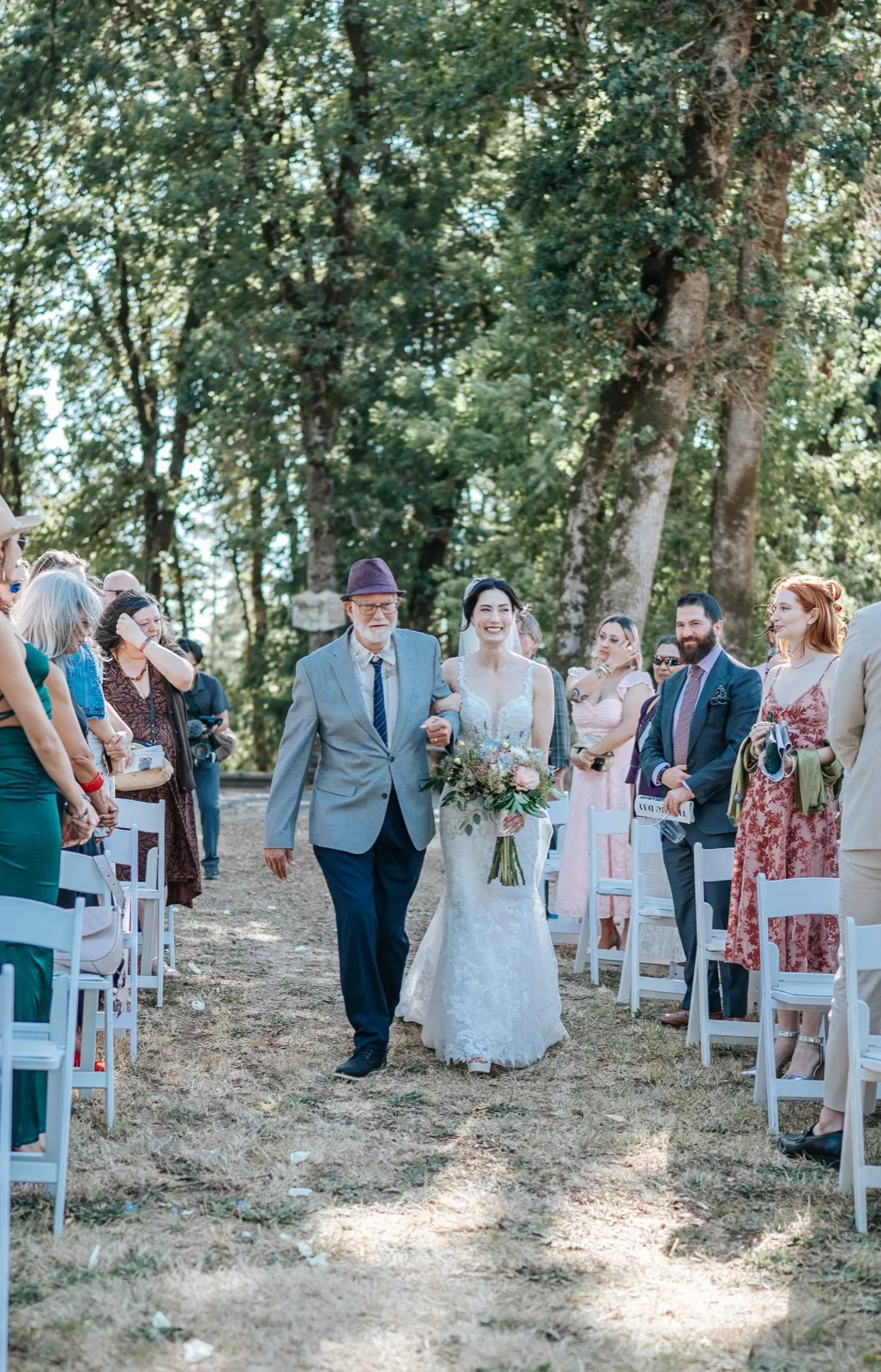
Your wedding can’t be re-shot. So the question that matters more than almost any other, and the one couples almost never ask, is: what happens if something fails? Here are the backups a professional should have in place.
The backups that protect your photos
Two card slots, always recording. Professional cameras write to two memory cards at once, so every photo exists in two places the moment it’s taken. If one card fails, nothing is lost. This is the baseline.
Backup gear on hand. A second camera body and extra lenses, batteries, and cards on site. If a camera goes down mid-ceremony, the shooting doesn’t stop.
Your photos backed up in multiple places. After the wedding, the files should be copied to more than one drive, and ideally to the cloud, before anything gets formatted. One copy is not a backup.
A second shooter. Beyond getting more angles, a second photographer is built-in redundancy. If something happens to one camera or one person, the day is still covered.
A replacement-shooter plan. The hard one. What if the photographer is genuinely sick or has an emergency on your wedding day? A pro has a network and a plan to get a qualified replacement, and says so in the contract.
What I do
I shoot with professional backup gear and dual card slots, so your photos exist in two places from the second they’re taken, and I back up every gallery in more than one place before anything is touched. The Signature and Heirloom collections include a second shooter, which is its own layer of protection.
Just ask
If a photographer can’t clearly answer “what’s your backup if a card fails or you can’t make it,” that’s the answer. Ask early. If you want to know exactly how I’d protect your day, reach out, and have a look at the questions worth asking any photographer.
Author
Tex Kelly
- weddings
- hiring
- arizona
- backup
- planning